
Views: 0 Author: Site Editor Publish Time: 2026-03-27 Origin: Site


Choosing a Pocket Spring Machine is more than a simple equipment decision. It shapes mattress quality, production flow, labor use, and future growth. Many buyers focus on speed first, yet speed alone rarely ensures stable output or consistent product performance.
So how do you choose a Pocket Spring Machine that truly fits your factory? The challenge is not just comparing machines. It is about matching the machine to your production goals, product range, and daily workflow. If it cannot align with your real needs, it may create delays instead of improving efficiency. In this article, you will learn how to make a practical choice. We will explore production requirements, key specifications, automation features, and supplier factors. By the end, you will have a clear way to compare options and choose with confidence.
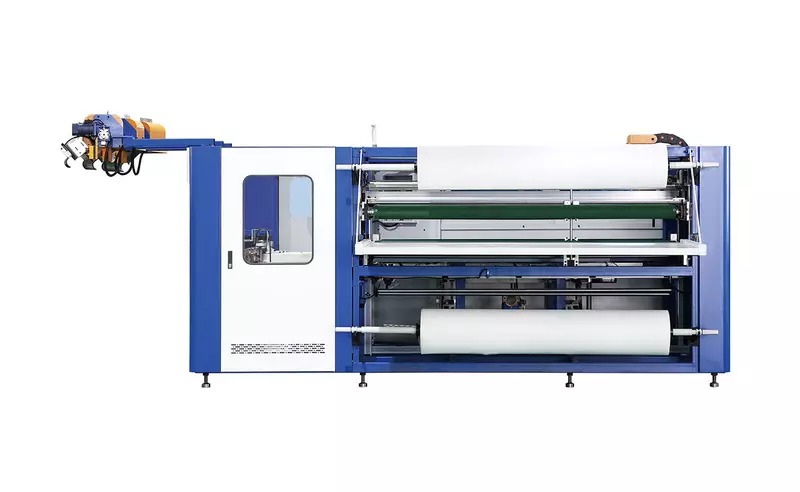
Daily output is the first filter. If your factory runs large, repeat orders every week, a fully automatic Pocket Spring Machine usually makes more sense. It can keep the line moving at a stable pace and cut manual handling. If your orders change often, or volumes stay moderate, a more flexible system may suit you better. The point is simple: we should buy for actual demand, not idealized demand.
It helps to map production in three layers: daily target, peak target, and growth target. Daily target tells us the base level. Peak target shows what happens during busy periods. Growth target helps us avoid buying a system we outgrow too fast. The source file also stresses matching machine speed and automation level to manufacturing goals, especially when output rises and labor efficiency becomes more important.
Here is a quick planning view:
Production pattern | Best machine direction | Main reason |
High daily output, stable orders | Fully automatic | Better speed, lower manual input |
Medium output, mixed orders | Semi-automatic | Better balance between cost and flexibility |
Small batches, custom models | Flexible setup focus | Easier spec changes and lower pressure |
Your machine should fit the products you actually sell, not only the products you hope to make one day. If your line focuses on standard pocket spring mattresses, your needs will differ from a factory producing zoned, ergonomic, or hybrid mattresses. Spring height, spring diameter, wire gauge, and coil count all affect the final mattress feel. A good Pocket Spring Machine should support the spring formats behind your most important product categories.
This is where many buyers can improve their evaluation process. Instead of asking, “Can this machine make pocket springs?” ask, “Can it make the specific pocket springs my market needs?” If your business depends on multiple mattress models, broader compatibility gives you more room to serve different customers without adding new equipment too soon.
Some factories win through scale. Others win through variety. If your orders are large, repetitive, and time-sensitive, speed should lead your decision. A high-output Pocket Spring Machine can help you shorten production cycles and serve more orders without expanding labor too quickly. This is especially useful when your business supplies distributors, large retailers, or stable export channels.
If your factory handles more custom requests, flexibility may be the stronger advantage. A machine that supports quick adjustments can help you switch spring sizes and mattress specifications more smoothly. That saves time during product changes and helps you respond faster to customer requests. In short, the best machine is not always the fastest one. It is the one that fits how you work every day.
A machine purchase should support tomorrow’s production, not only today’s workload. If your team expects growth in volume, model variety, or export demand, the Pocket Spring Machine should have room to scale. This does not mean buying the largest system available. It means choosing one that can grow along a sensible path.
A practical way to think about it is to ask three forward-looking questions:
● Will we add more mattress models in the next two years?
● Will we move toward more automation across the line?
● Will we need stronger digital control over production?
If the answer is yes to even one of them, scalability deserves real weight in the buying decision. It often protects return on investment better than chasing the lowest upfront price.
One of the first things to check is whether the machine can handle the spring sizes you need. That includes spring diameter, spring height, wire gauge, and coil count. Broad compatibility gives you more freedom in design, especially if your product line includes soft, medium, and firm mattress models. It also helps if you plan to produce zoned structures for different body support needs.
A more versatile Pocket Spring Machine can reduce the need for additional equipment later. It also gives your sales team more freedom to offer new products. If the machine supports only a narrow range, your production options may stay limited even if the market changes.
Speed matters, but stable speed matters more. Many buyers focus on maximum output figures, such as springs per minute. Those numbers are useful, yet they should not be the only benchmark. You need to know how the machine performs during long production runs. Can it maintain quality and rhythm over time? Can it produce consistently without frequent stoppages? The reference material stresses this point by connecting speed to reliability, not just headline capacity.
Stable performance has a direct effect on delivery schedules and product quality. A machine that runs smoothly for long shifts gives you more predictable production planning. It also reduces waste, operator stress, and output variation. When comparing machines, ask for real production examples, not only catalog numbers.
Precision shapes the final mattress more than many buyers expect. If the coiling process varies too much, spring response may change across the core. If pocketing or sealing lacks consistency, the mattress unit may lose alignment and feel less refined. For this reason, we should look closely at forming accuracy, sealing method, and spring tension control.
The source file mentions high-accuracy coiling and consistent spring tension as important selection points. It also highlights non-woven fabric compatibility and modern sealing approaches, including ultrasonic methods in some cases. These factors support cleaner structure, stronger consistency, and more reliable mattress performance.
A useful comparison checklist looks like this:
● Can it handle the non-woven fabric range you use?
● Can it maintain stable spring shape across long runs?
● Can it keep sealing quality consistent during speed changes?
When production demand becomes stable and large-scale, manufacturers need more than basic efficiency. They need consistent output, higher speed, and smoother workflow. A fully automatic Pocket Spring Machine is designed to support these needs, especially in factories aiming for continuous production and reduced manual work.
To better understand its role, here is a simplified overview:
Key Aspect | Machine Performance | Production Value |
Automation | Minimal manual operation | Lower labor needs |
Stability | Consistent long-run output | Reliable production |
Speed | High-speed capability | Higher daily output |
Integration | Connects with assembly lines | Smoother workflow |
Efficiency | Fewer operators required | Reduced costs |
These advantages make it a strong choice for factories focused on scale and automation.
A semi-automatic machine can be a smart choice for mid-sized factories or operations still growing. It offers a practical balance between efficiency and control. It usually costs less at the start than a full automatic system, yet it still improves output compared with more manual methods. For businesses managing moderate order volume or frequent product changes, it can be a flexible solution.
This type of Pocket Spring Machine works well when your factory needs adaptability more than maximum speed. It can support product variation and help you increase efficiency without requiring a complete shift in production structure right away.
When comparing machine types, it is useful to look at how established manufacturers present their strengths. In the source material, Yulun positions itself as a long-term specialist in mattress pocket spring machinery, with emphasis on R&D, intelligent manufacturing, and stable product quality. It also highlights years of industry focus, patent development, and investment in production control.
That does not mean one brand is automatically right for every buyer. It does show what serious buyers should look for: technical focus, manufacturing depth, and a clear understanding of mattress production needs. Those signals often tell you more than a sales brochure alone.
Modern equipment should do more than run fast. It should help your team work more accurately. CNC control and programmable settings improve repeatability, reduce setup errors, and make changeovers easier. If your factory produces more than one spring format, saved parameter settings can be a major advantage.
A capable Pocket Spring Machine should let operators adjust settings clearly and repeat them with confidence. The source text mentions programmable CNC controls and digital memory as useful features in machine selection. These functions can save time and help keep product quality stable across shifts and production batches.
Ease of operation matters more than many buyers think. A machine with a clear touchscreen interface and intuitive controls can shorten training time and reduce day-to-day errors. It also makes it easier for supervisors to monitor setup, output, and machine status.
This becomes even more valuable when your team handles multiple product specifications. A user-friendly Pocket Spring Machine supports smoother operation, especially when staff need to switch settings quickly or train new operators. Simple control does not mean simple performance. In many cases, it means better performance because the machine is easier to use well.
A pocket spring machine does not work in isolation. It should fit smoothly into the larger production flow. If it cannot connect well with downstream assembly equipment, your line may lose speed and efficiency. Good compatibility supports cleaner transfer, smoother workflow, and more stable output across the whole process.
That is why line integration should be part of your buying decision from the start. A Pocket Spring Machine that works well with assembly stages can help reduce manual handling and improve final mattress core consistency.
Many mattress brands now want more than standard spring rows. They want zoned support, custom firmness areas, or denser layouts for premium feel. Your machine should support the structures your customers expect. That includes the ability to produce springs suitable for different layouts and comfort designs.
This matters because product differentiation often happens at the support-core level. If your Pocket Spring Machine can support more advanced spring structures, it can help your business move into higher-value mattress categories.
A strong frame, dependable motors, and quality components all support long-term operation. Reliability is not only about avoiding stoppages. It is also about protecting output quality over time. A well-built Pocket Spring Machine helps your factory run with more confidence during long production shifts.
The source material emphasizes reinforced structures, quality components, and durability as important parts of machine value. These features support stable production, lower disruption, and a stronger long-term return.
The source text also gives a useful example from Yulun’s assembly-machine positioning. It highlights features such as ultrasonic welding, precise positioning systems, support for zoned structures, and compatibility with different spring layouts. For buyers, this is a helpful reminder: do not judge a machine only by what it does at the coil stage. Think about how well it supports the complete mattress core process.
If your line includes advanced assembly needs, use those factors as a checklist. Ask whether the machine supports your preferred joining method, your mattress widths, and your target spring layout styles.
A good machine matters, but so does the team behind it. Suppliers with real mattress machinery experience usually understand production details better. They are more likely to design equipment around actual factory needs, not only around technical theory. Engineering depth often shows up in better machine stability, smarter layouts, and stronger process support.
When evaluating a Pocket Spring Machine supplier, ask about product development, engineering background, and industry focus. Experience in mattress machinery is often a sign of stronger problem-solving ability.
Support after installation is part of the machine value. Training helps operators use the machine correctly from the beginning. Technical support helps solve issues quickly. Spare parts access helps protect uptime. A supplier may offer an impressive machine, but if support is slow or weak, your production may suffer.
The source material specifically recommends checking training, technical help, and troubleshooting support during supplier evaluation. That advice is practical. In daily factory work, reliable support can save time, protect orders, and improve operating confidence.
Certifications and process control can give buyers more confidence. They do not prove every machine is perfect, yet they often show a stronger manufacturing mindset. The source file mentions CE certification as one important point, and it also describes quality system control as part of supplier strength.
It is also worth noting how Yulun presents ISO9001-based quality management and controlled production procedures in the source material. For buyers, this kind of information can support trust in machine consistency, durability, and process discipline.
Supplier check area | What to ask | Why it matters |
Engineering depth | How do you improve stability and precision? | Shows real technical understanding |
Service plan | How fast is support after installation? | Protects uptime |
Training | What operator training is included? | Reduces startup errors |
Certifications | Do you hold CE or quality system approvals? | Builds confidence in process control |
Note: Compare suppliers using the same question list. It keeps the decision fair and easier to defend.
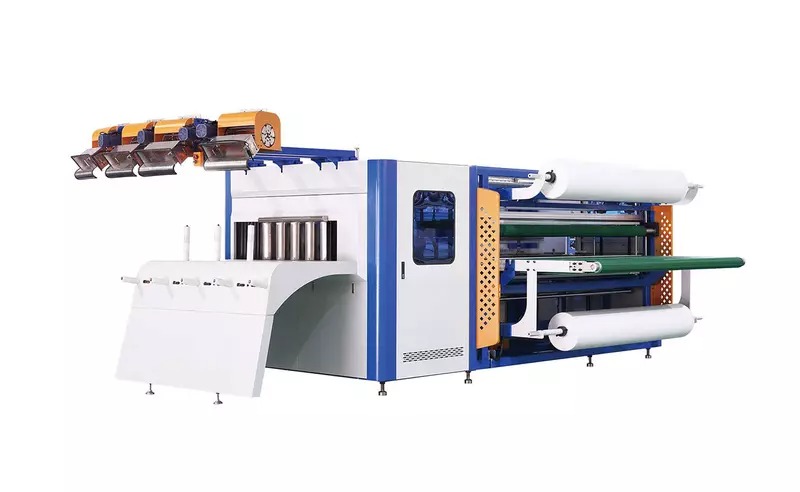
The best Pocket Spring Machine is not just the fastest or most advanced. It is the one that fits your production volume, product plan, and automation goals. When the match is right, it helps improve consistency, reduce labor pressure, and support steady factory growth.
A smart choice follows a clear path. Start from your output needs, then review spring compatibility, stable performance, machine type, and automation features. Also consider how well it connects to your full production line and the level of supplier support. This process makes decisions more practical and reliable.
In real production, the right machine improves more than efficiency. It strengthens mattress quality, delivery stability, and overall competitiveness. Companies like Guangdong Yulun Intelligent Technology Co., LTD. offer solutions designed for precision, automation, and long-term reliability, helping manufacturers build stronger and more scalable production systems.
A: A Pocket Spring Machine produces individual fabric-encased springs for mattresses. It forms, pockets, and seals each spring, helping manufacturers create consistent and high-quality mattress cores.
A: You should match the Pocket Spring Machine to your production volume, product types, and automation needs. Consider speed, flexibility, and compatibility with your existing production line.
A: Speed affects output capacity, but stability matters more. A reliable Pocket Spring Machine ensures consistent performance during long runs, which improves delivery timelines and product quality.
A: A fully automatic Pocket Spring Machine suits high-volume production with less labor. A semi-automatic version offers more flexibility and is better for medium output or varied product lines.
A: Key features include spring size compatibility, CNC control, stable performance, and easy operation. A good Pocket Spring Machine should also support different mattress designs and production needs.


